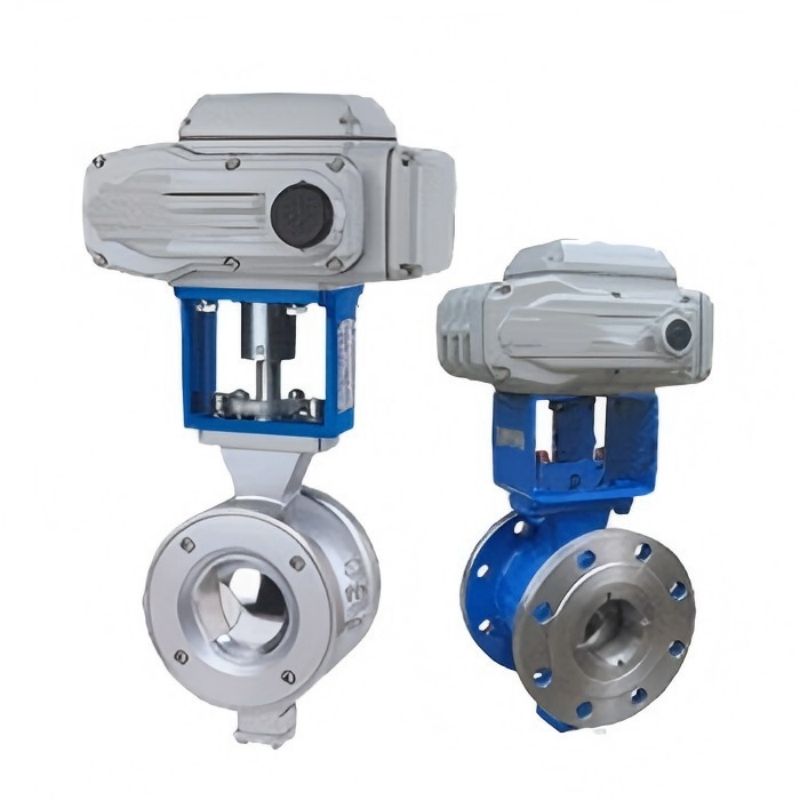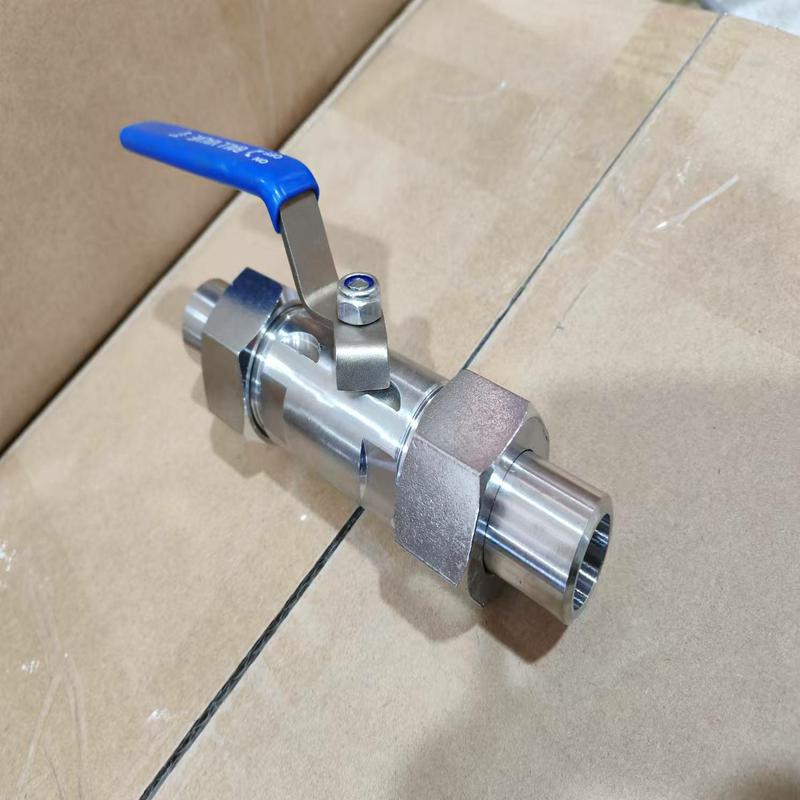

Product Code : VCC-F--QQ477-CU
Nominal diameter: DN15 - 200mm, 1/2 - 2in
Nominal pressure: PN1.6 - 10.0Mpa, Class 150 - 600Lb
Applicable temperature: -28 - 300°C, -28 - 180°C, -28 - 425°C
Butt-weld connection: ANSI B16.25, GB 12224-1989
Connection method: Flange connection: JB/T79-1994, GB9113-1988, ANSI B16.5, HGJ44~76-1991, HG 5010-1958
Please contact us if you need customized services. We will contact you with the price and availability in 24 hours.
| Product | Product Code | Purity | Size | Contact Us |
Introduction to the Up-Valve Type Inclined Ball Valve:
The up-valve type ball valve is easy to disassemble and repair on the pipeline. When the valve malfunctions and needs to be repaired, there is no need to remove the valve from the pipeline; only the middle flange bolts and nuts need to be removed, and the valve cover and valve stem assembly can be taken out from the valve body. Then, the ball and valve seat assembly can be removed. This repair saves time and minimizes production losses.
The up-valve type ball valve is divided into floating ball valve and fixed ball valve. The nominal size of the up-valve type floating ball valve is ≤ DN200. A compression spring is applied to the ball, and the function of the compression spring is to apply preload force to the ball, ensuring that the valve seat sealing surface is in close contact under any circumstances, resulting in good sealing performance. The wedge angle of the joint surface between the valve seat and the valve body is 10°, and the valve seat can self-lock. In the pipeline direction, when the valve seat is subjected to a large pressure, the valve seat will not undergo any displacement. Therefore, this structure of the valve has the characteristics of a gate valve and the advantages of a ball valve. During maintenance and inspection, it was found that leakage occurred between the valve body and the valve seat. If the preload force of the spring is increased, the closing torque of the ball valve will inevitably increase. To avoid increasing the closing torque of the ball valve, a rubber O-ring is added to the back of the valve seat sealing surface to solve the leakage problem. The disadvantage of the up-valve type fixed ball valve is that the preload force of the spring cannot be adjusted or controlled, and the spring compression amount during assembly is large, making the assembly difficult. To solve this problem, the adjusting nut is withdrawn from the spring seat. At this time, the preload force of the spring on the ball is relatively small. If the preload force needs to be increased, the adjusting nut can be used for adjustment. The spring material is selected as ANS1 302 instead of 304. ANS1 302 has good stiffness and its corrosion resistance is similar to 304. Additionally, the spring seat and adjusting nut are added, and the valve seat outer circle and the spring seat are respectively machined with threads. The adjusting nut is used to press the spring into the spring seat, and the valve seat assembly is then installed into the valve body. Since the spring has been compressed before installing the ball, the installation of the ball is very convenient.
The above-mentioned ball valve is widely used in oil and gas pipelines, as well as in various facilities such as oil extraction, refining, petrochemical, chemical, fiber, metallurgy, power, nuclear power, food, and papermaking.
Packing of Standard Packing:
Typical bulk packaging includes palletized plastic 5 gallon/25 kg. pails, fiber and steel drums to 1 ton super sacks in full container (FCL) or truck load (T/L) quantities. Research and sample quantities and hygroscopic, oxidizing or other air sensitive materials may be packaged under argon or vacuum. Solutions are packaged in polypropylene, plastic or glass jars up to palletized 470 gallon liquid totes Special package is available on request. E FORUs’ is carefully handled to minimize damage during storage and transportation and to preserve the quality of our products in their original cond