
Product Code : VF--QCC-Q335-CU
Nominal size NPS; 1 1/2" - 3" Nominal Pressure Class; 150
Design and manufacture; GB/T 12237, GB/T 21385, API 608, ASME B16.34
Connection flanges; JB/T 79, GB/T 9113, HG/T 20592, HG/T 20615, SH/T 3406, ASME B16.5, etc.
Inspection and testing; GB/T 26480, JB/T 9092, API 598
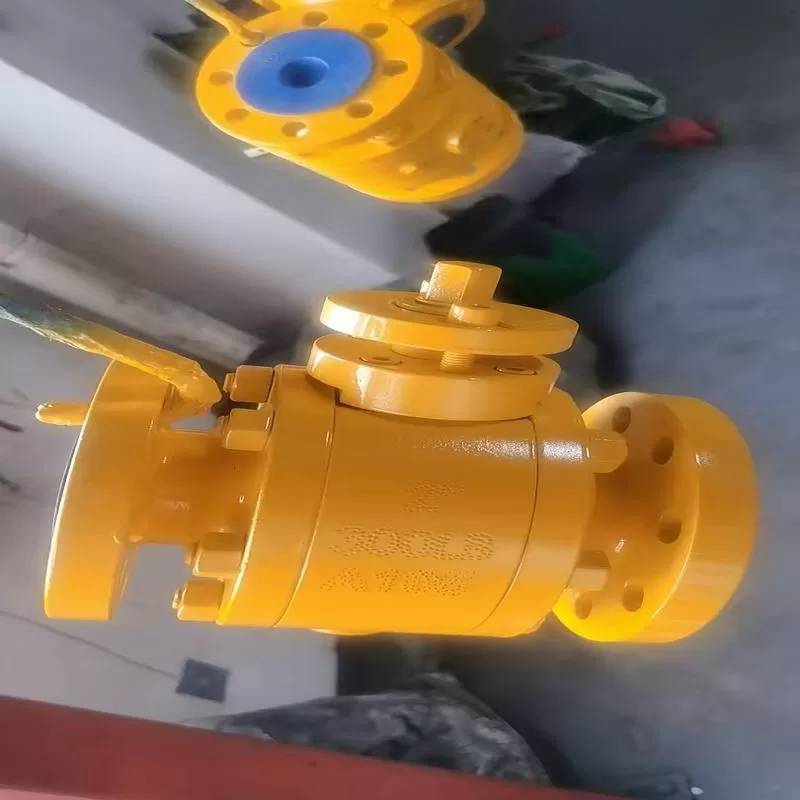
The ball body of the insulated Y-type three-way ball valve is integrally cast with the valve stem, thereby improving the concentricity accuracy. It can be designed to have a 90% or 120° angle between the two outlet ends of the valve body according to the working conditions. A metal jacket is welded on the outer side of the shell, and it is connected to the inlet and outlet pipes of the heating fluid. In a low-temperature environment, it can conduct flow heating of the valve body to prevent the material inside the valve from solidifying or crystallizing. Therefore, this product not only has the characteristic of insulation but also can switch the direction of the medium flow. If combined with pneumatic, electric or hydraulic devices, it can also achieve the function of automatic control.
Please contact us if you need customized services. We will contact you with the price and availability in 24 hours.
| Product | Product Code | Purity | Size | Contact Us |
The insulated Y-type three-way ball valve is a type of ball valve suitable for installation in pneumatic or gravity Y-shaped pipeline transportation systems, used to quickly change the flow direction of easily condensing, crystallizing and viscous media at normal temperatures. The inlet of the valve body and the two outlets are designed at a 135° angle or the three channels are mutually at a 120° angle. The valve cavity is equipped with a through-hole with a 135° or 120° angle attached to the ball, and the ball rod is driven by a driving device to rotate 135° or 120° within the valve to achieve the circulation or cutoff of the inlet and any outlet, thereby achieving the switching of two different flow directions.
The ball body and the valve stem of the insulated Y-type three-way ball valve are integrally cast, thereby improving the concentricity accuracy. It can be designed such that the angle between the two outlet ends of the valve body is 90% or 120° according to the working conditions. The outer side of the shell is welded with a metal jacket and connected to the inlet and outlet pipes of the heating fluid. In a low-temperature environment, the valve body can be heated for flow to prevent the material inside from solidifying or crystallizing. Therefore, this product not only has the characteristic of insulation, but also can switch the flow direction of the medium. If combined with pneumatic, electric or hydraulic devices, it can also achieve the function of automatic control.
The ball body of the insulated Y-type three-way ball valve is integrally cast with the valve stem, thereby improving the concentricity accuracy. It can be designed to have a 90% or 120° angle between the two outlet ends of the valve body according to the working conditions. A metal jacket is welded on the outer side of the shell, and it is connected to the inlet and outlet pipes of the heating fluid. In low-temperature environments, it can conduct flow heating of the valve body to prevent the material inside the valve from solidifying or crystallizing. Therefore, this product not only has the characteristic of insulation but also can switch the flow direction of the medium. If combined with pneumatic, electric or hydraulic devices, it can also achieve the function of automatic control.
Packing of Standard Packing:
Typical bulk packaging includes palletized plastic 5 gallon/25 kg. pails, fiber and steel drums to 1 ton super sacks in full container (FCL) or truck load (T/L) quantities. Research and sample quantities and hygroscopic, oxidizing or other air sensitive materials may be packaged under argon or vacuum. Solutions are packaged in polypropylene, plastic or glass jars up to palletized 470 gallon liquid totes Special package is available on request. E FORUs’ is carefully handled to minimize damage during storage and transportation and to preserve the quality of our products in their original condition